
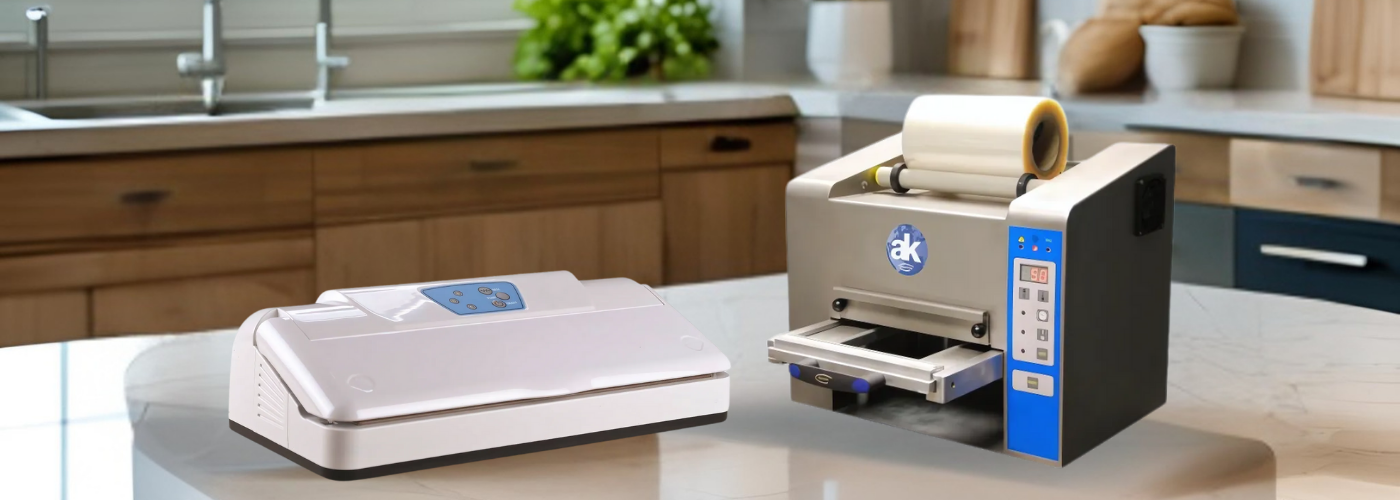
If you work in food production, retail, catering, or even run a busy butchery, you already know how important it is to get your packaging right. It’s not just about looks — proper packaging extends shelf life, ensures hygiene, improves presentation, and gives customers confidence in your product.
But when it comes to choosing between a tray sealer and a vacuum sealer, how do you know which is the better fit for your operation?
At PFM Plus, we supply a wide range of food packaging equipment to businesses across the UK.
We’ve worked with all kinds of operations — from small artisan producers to large-scale meat processors — and we know that choosing the right sealing machines UK suppliers offer can make all the difference in both efficiency and quality.
So, let’s break down the real differences between vacuum or tray sealing, what each one does best, and how to decide which commercial food sealer suits your setup.
A vacuum sealer removes air from a bag or pouch and seals it shut.
This process helps preserve freshness, slows down spoilage, and prevents freezer burn.
They’re commonly used in meat, cheese, and fish packaging, as well as for sous-vide cooking in commercial kitchens.


A tray sealer, on the other hand, seals food inside rigid or semi-rigid trays with a film lid.
This can also be done in an atmosphere-controlled manner, using MAP (Modified Atmosphere Packaging) to help prolong shelf life.
Tray sealing is ideal for ready meals, marinated meats, salads, and deli items — anything where visual appeal, portion control, or leak resistance is key.
If you’re working with fresh meat, poultry, or fish, vacuum sealing is often your best bet. Removing the air from packaging significantly extends shelf life and keeps produce looking fresh and vibrant for longer. Butchers love vacuum sealing for portioning meat cuts, keeping prep clean, and reducing waste due to spoilage.
For example, if you’re preparing steaks for sale or freezing chicken breasts in bulk, a vacuum sealer will do the job quickly and neatly. The vacuum process also allows for flatter, more compact packages, saving valuable storage space in fridges and freezers.
Vacuum sealing is also popular with farm shops, cheese producers, and bakeries that want to portion out products while preserving them in a clean and food-safe way. It’s a flexible option, especially if your packaging setup needs to change based on demand or product type.
Tray sealing steps in when presentation really matters. Think of ready-to-eat lasagnes, fresh pasta dishes, or marinated kebabs in clear plastic trays — these are all ideal tray sealing candidates. Not only does this packaging style look tidy and professional, but it also prevents leaks and makes stacking and transporting easier.
Tray sealing also offers better branding opportunities. Because you’re sealing onto a tray, you can use clear or printed film to add logos, product details, or cooking instructions. Retailers, caterers, and ready-meal producers often prefer tray sealing for this reason.
Another advantage? You get consistency. Tray sealing gives you a uniform pack every time, which is great for shelf appeal and batch production. With machines available in a variety of sizes — including compact models for smaller kitchens — it’s an increasingly popular choice even for businesses outside of mass manufacturing.
Here’s where your business type really comes into play. If you’re doing high-volume, consistent production runs — say, hundreds of the same product daily — a tray sealer might be more efficient. It allows for speedy sealing of uniform trays, minimal mess, and easy labelling.
If you’re doing more varied work — different cuts, irregular shapes, small batch quantities — then a vacuum sealer might offer more flexibility. It’s also easier to use for items that need to be frozen or shipped in compact packages.
At PFM Plus, we often recommend starting with your average daily output and the level of prep variation. A small deli doing custom portions for customers will get better use out of a vacuum sealer. A meal prep company selling 200 chicken and rice trays a day? Definitely tray sealing territory.
In terms of initial investment, vacuum sealers tend to be more affordable. They’re also typically smaller and require less power, which is ideal for small kitchens or mobile catering setups. Consumables like vacuum bags are relatively low-cost and easy to store.
Tray sealers, especially larger automated versions, can be more of an investment upfront. However, they offer faster output and more professional-looking results. Trays and sealing film do cost more than vacuum bags, but the improved shelf presence and customer convenience can more than make up for it.
For many businesses, it’s not a matter of tray sealer vs vacuum sealer — it’s both. Using each machine where it excels can help you manage different product types, customer demands, and prep situations more efficiently.
There’s no one-size-fits-all answer. It comes down to what you’re packing, how much of it you’re producing, and how you want the finished product to look and perform.
If your priority is space-saving, portion control, and preserving raw or perishable goods, a commercial food sealer in the form of a vacuum sealer is hard to beat. But if you’re looking to showcase products, seal liquids or marinades without mess, or produce retail-ready packs with clear labelling, tray sealing is the way to go.
Still unsure? That’s where we come in.
At PFM Plus, we understand how overwhelming it can be to choose the right food packaging equipment for your business. That’s why we offer not just machines, but expert guidance, ongoing support, and consumables to keep you going.
We stock a wide range of both vacuum and tray sealing machines, suited to everything from local farm shops to national meal delivery brands. And we’re always happy to chat about your workflow, product range, and packaging goals to help you make the smartest choice for your setup.
Explore our full range of sealing machines UK businesses trust — and find the one that works for you. Because great food deserves great packaging.
